Snoring Every Night? 7 Hidden Signs of Sleep Apnea You Should Know
Learn about common signs of obstructive sleep apnea, possible health risks, and when to seek medical evaluation from a pulmonologist in Patna.
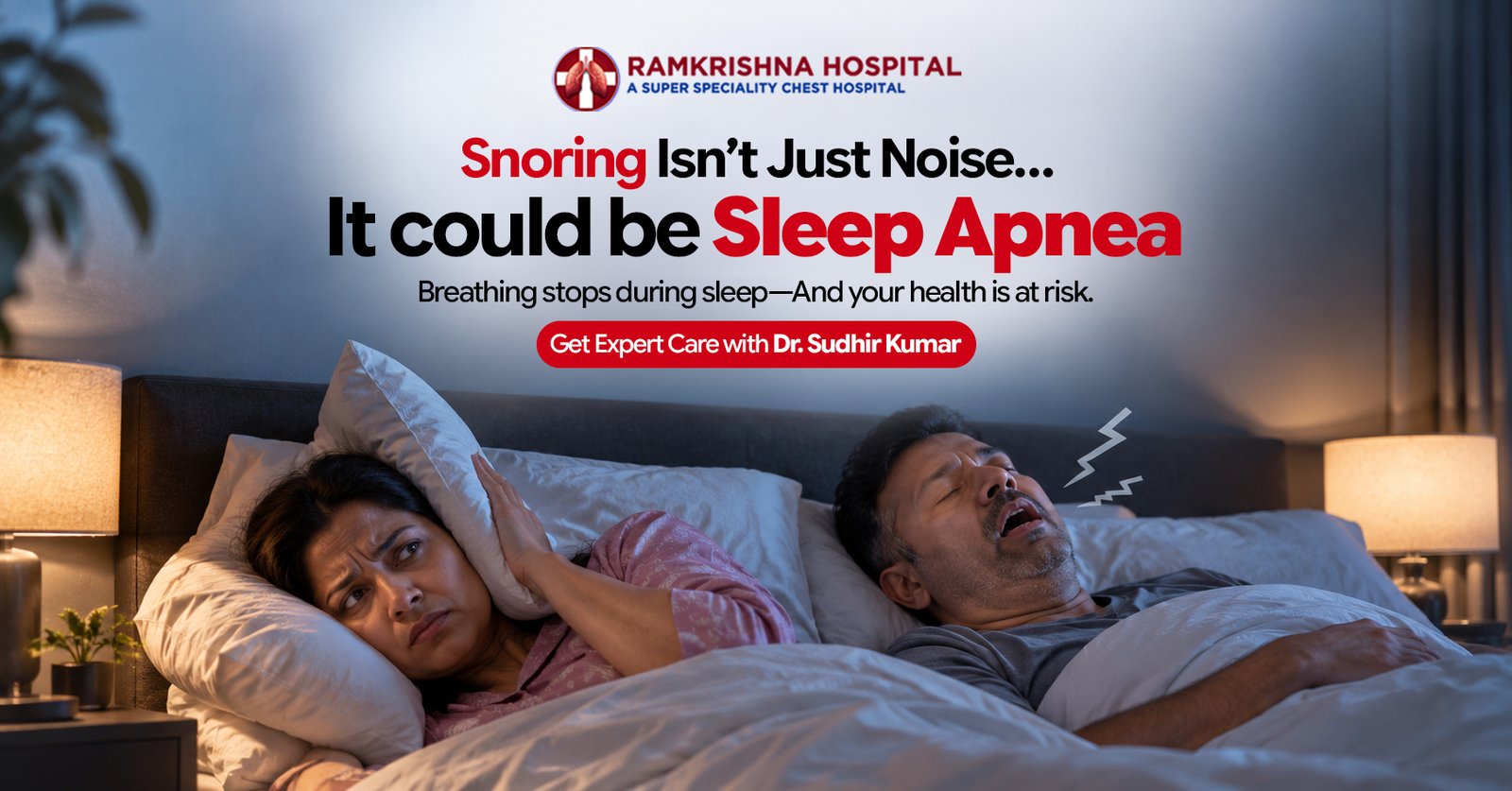
Do you snore loudly and wake up still feeling tired? Have your family members noticed you stop breathing or gasp for air while sleeping? These signs may be more than just a normal sleeping habit. They may be a sign of obstructive sleep apnea, a condition that affects breathing during sleep. Early diagnosis and appropriate treatment are essential to identifying the cause and reducing the risk of complications.
At Ramkrishna Chest Hospital, Dr. Sudhir Kumar provides expert care for respiratory conditions as an experienced pulmonologist in Patna.
Obstructive Sleep Apnea Syndrome
Sleep apnea syndrome is a condition in which the throat muscles relax during sleep, thereby obstructing the upper airways and causing difficulty breathing. Breathing may become difficult for some time, which can cause the person to wake up temporarily.
Loud snoring is a common symptom of sleep apnea, but not everyone who snores has this condition. Other signs include pauses in breathing during sleep, gasping for breath in the middle of the night, restlessness, and daytime drowsiness.
Also, some people may be unaware of these instances of interruptions in breathing while sleeping. Being aware of such symptoms will assist you in noticing a person suffering from sleep-disordered breathing.
7 Hidden Signs of Sleep Apnea You Should Know
1. Loud Snoring That Disturbs Others
Snoring is usually nothing to worry about, especially if you have been snoring for years. However, it could be an indication that there is a problem if you have been snoring excessively and regularly. It may show that you have a narrower upper airway.
You may not be aware of the noise, but your partner or other family members may find it difficult to sleep because of it. They might also observe that your snoring suddenly becomes much louder and then suddenly stops.
Although snoring is not always a reason for concern, intermittent snoring is often an indicator of sleep apnea. Especially if you find yourself gasping for air when you're sleeping and are always tired, no matter how long you sleep.
2. Breathing Pauses During Sleep
Breathing pauses when asleep are a very prevalent symptom of sleep apnea syndrome.
Your family members who were sleeping in the same room will notice how you stop breathing for a few seconds, after which you start breathing again with a snort, a gasp, or a loud sound made while breathing.
Interrupted breathing is not something that should be taken lightly, and especially not when coupled with loud snoring or waking up from not refreshing sleep. The medical evaluation will determine the cause of the disrupted breathing, whether it is sleep apnea or something else.
3. Gasping For Air or Waking Up Feeling Choked
Have you ever woken up suddenly in the night like you had to take a deep breath? There are some people who suddenly wake up feeling like they are choking on their breath or struggling to breathe.
This could be happening because, at night, while you are asleep, your airway is getting blocked off, causing you to be unable to breathe properly. The only reason you might have fallen back asleep was that, though you were alerted to it, you did not think about it. This will cause you to not get enough sleep and be tired the following day.
There are many reasons you might gasp at night, and not all of them have to do with sleep apnea. But especially when you have loud snoring while you sleep, you should be evaluated by Dr. Sudhir Kumar, the best pulmonologist in Patna.
4. Even After a Restful Night's Sleep, Daytime Drowsiness
A person may experience insufficient sleep even if they have slept for seven or eight hours.
If you have obstructive sleep apnea, you may not get enough sleep. Not getting enough sleep may cause you to be tired, have a decreased ability to focus, and even fall asleep while doing other activities.
Many people may think they have a busy schedule, which may be the cause of their symptoms, when in reality they may be suffering from Obstructive Sleep Apnea.
However, loud snoring along with excessive daytime sleepiness might be a sign of disrupted breathing during sleep. Consult Dr. Sudhir Kumar at Ramkrishna Chest Hospital, Patna, for proper medical evaluation.
5. Morning Headaches After Waking Up
Waking up with a headache can be frustrating, particularly when it happens repeatedly despite getting enough sleep.
There are many possible causes of morning headaches. They might be linked to sleep apnea and other symptoms of trouble breathing during the night in some people. However, if headaches are triggered by severe, or being tired during, you should consult Dr. Sudhir Kumar, the best pulmonologist in Patna, to find the root causes and talk about the relevant treatment.
6. Trouble Concentrating or Paying Attention
You might have trouble concentrating, storing or recalling things in your memory, or performing everyday activities if you aren’t getting good sleep.
This could mean having a hard time paying attention at work, having conversations, staying on task at school, or even completing multi-step assignments at work. You may think this is due to the stresses and busyness of everyday life.
The cause of this problem could be stress and a hectic lifestyle. If you are facing difficulties concentrating and suffering from loud snoring and excessive daytime sleepiness, it could be due to interference with the normal sleep cycle.
7. Night Awakenings and Restless Sleep
Another obvious indication is waking up repeatedly at night. Some people may feel restless, due to breathing difficulties during sleep.
It is important for you to count how many times you wake up at night and see if there are any indications of snoring from your partner.
Risks of Untreated Sleep Apnea
Not treating sleep apnea can have lifelong effects on your health. Leaving it untreated can lead to many serious health issues.
- Heart Disease: Heart attacks, atrial fibrillation, and congestive heart disease are more likely due to low oxygen levels and high blood pressure in the body.
- Stroke: There is an increased probability of having a stroke due to low oxygen levels and high blood pressure.
- Type 2 Diabetes: There is a chance of developing type 2 diabetes due to the body's resistance to insulin caused by this condition.
- Workplace and Car Accidents: People suffering from sleep apnea tend to be very sleepy because of their lack of sleep during the night, which makes them inattentive both at work and on the road.
These risks do not suggest that everyone who has sleep apnea will experience any of the problems. However, if you identify these warning signs, then you will be able to get the proper treatment for your condition.
Take the Next Step Towards Better Sleep
If you snore loudly every night, don’t ignore it. The answer is to take control and understand why it might be happening, because severe snoring can be a symptom of obstructive sleep apnea.
Frequent snoring, pauses in breathing, and daytime fatigue may be signs of sleep apnea. Visit Ramkrishna Chest Hospital (RKCH) for proper respiratory care. Dr. Sudhir Kumar, the best pulmonologist in Patna, assists patients in understanding the underlying reason for their symptoms and getting proper medical treatment.
In case of loud snoring, breathing pauses, and constant sleepiness during the day, you can visit Ramkrishna Chest Hospital to find out the reason and the possible next steps.
Your snoring may be normal, but the reason behind it might not be. Be aware of your sleep and learn about your symptoms.
Frequently Asked Questions
1. Is loud snoring a symptom of sleep apnea?
Loud and persistent snoring, with pauses in breathing or sudden gasps during sleep between snoring or loud snoring, obstructive sleep apnea may be the cause of excessive daytime sleepiness. But if a person snores, it does not necessarily indicate they have obstructive sleep apnea. Several other factors must be taken into consideration and evaluated by a doctor.
2. How is obstructive sleep apnea diagnosed?
A doctor will examine your sleep sample and medical history for plenty of signs and symptoms. Depending on your symptoms, they may recommend certain tests to evaluate your breathing at some stage of sleep.
3. Does obstructive sleep apnea affect day-to-day activities?
Yes, it can impact a person’s day-to-day activities, as it can cause a person to be excessively sleepy during the day. It can also affect a person’s work and/or school activities because of impaired alertness and concentration, as well as memory problems.
4. Can a young adult have obstructive sleep apnea?
Yes, it can occur at any age, including young adults. Loud snoring, along with periods of pauses in breathing, and excessive daytime sleepiness should be evaluated.